By Edward Makuzva
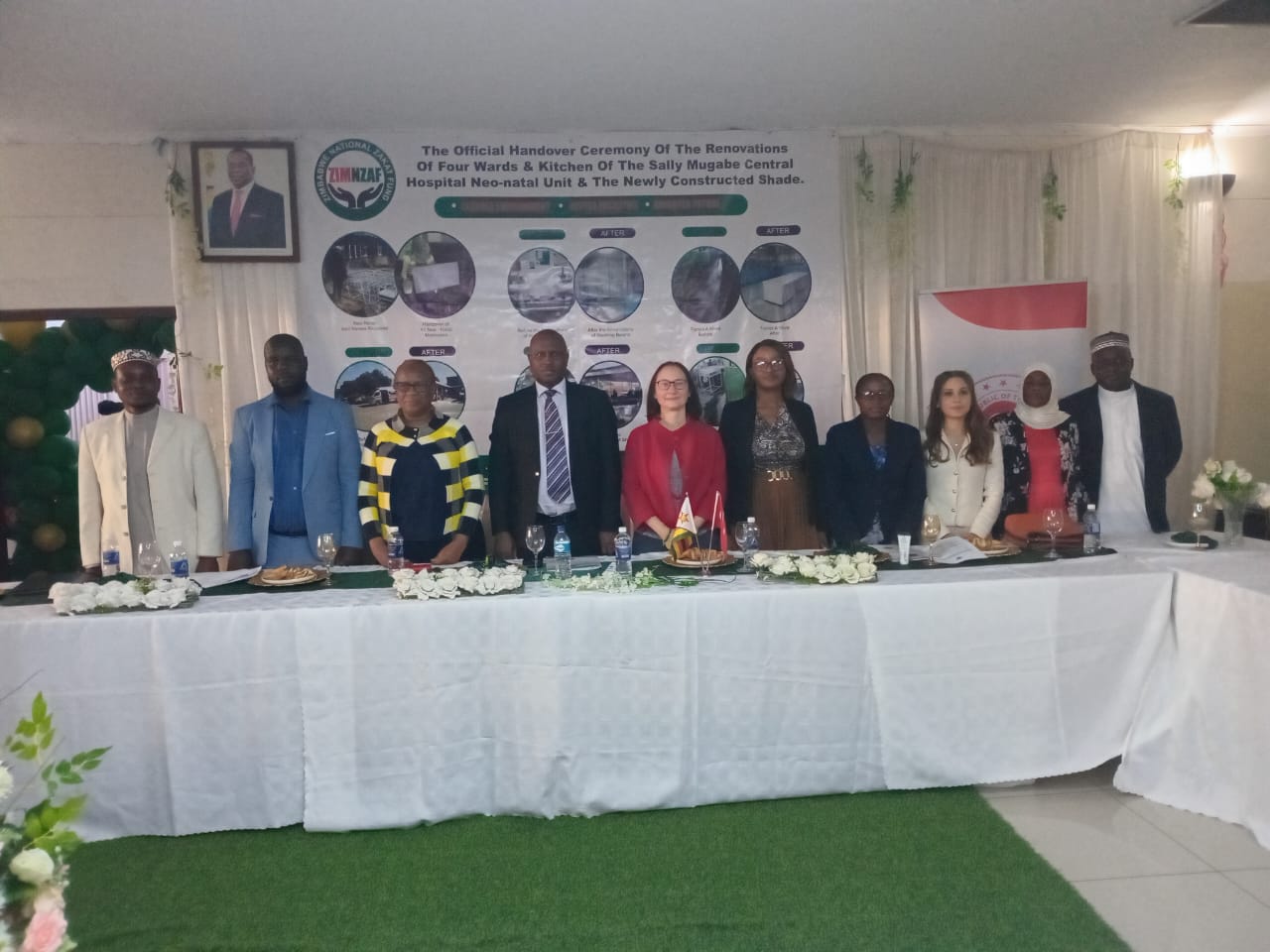
Government’s drive to modernise public health infrastructure and improve maternal and newborn care has received a major boost following the renovation of four neonatal wards and kitchen facilities at Sally Mugabe Central Hospital, alongside the construction of a new waiting shade at the maternity admissions entrance.
The project, spearheaded by the Zimbabwe National Zakat Fund (ZIMNZAF) in partnership with the Turkish Cooperation and Coordination Agency (TİKA) and Johanne Masowe Chishanu, demonstrates the growing contribution of faith-based organisations and development partners towards strengthening Zimbabwe’s health delivery system.
Speaking during the official handover ceremony in Harare yesterday, ZIMNZAF national director Sheikh Henry Balakazi said the intervention was undertaken to complement Government efforts to improve access to quality healthcare and advance the aspirations of Vision 2030.
He said ZIMNZAF, an Islamic faith-based organisation, signed a Memorandum of Understanding with the Ministry of Health and Child Care in February 2021, providing a framework for collaboration on national health and development programmes.
“The Zimbabwe National Zakat Fund is an Islamic faith-based organisation representing the interests of the Islamic society and committed to contributing to national development in Zimbabwe,” Sheikh Balakazi said.
He said the MoU also allows the organisation to forge partnerships with local and international organisations to mobilise resources for development initiatives.
Under the latest intervention, four neonatal wards and a kitchen were renovated, while a new waiting area for mothers and visitors was constructed.
The scope of works included plumbing, carpentry, retiling, painting and electrical repairs, as well as refurbishment of bed frames and provision of 41 new mattresses.
Sheikh Balakazi said improving the neonatal environment was particularly important in strengthening infection prevention and protecting newborn babies.
“This intervention will help to curb infant morbidity and mortality caused by infections contracted inside the hospital due to dilapidated and malfunctioning infrastructure,” he said.
The project was supported by TİKA, which provided US$20 768,10 towards the procurement of renovation materials supplied by Halsted Builders Express.
Sheikh Balakazi commended Turkish Ambassador to Zimbabwe, Her Excellency Berna Kasnakli Versteden, and Third Secretary Ms Sultan Okatar for facilitating the partnership.
Johanne Masowe Chishanu, led by Madzibaba Moses Gwasarira, contributed a further US$6 048 towards overtime allowances for artisans who carried out the renovations under the supervision of the relevant Government departments.
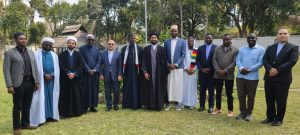
Sheikh Balakazi said cooperation between the Muslim community and Johanne Masowe Chishanu demonstrated Zimbabwe’s strong tradition of religious tolerance and the potential for different faith communities to unite around national development.
“This is a clear testimony that in Zimbabwe, a nation of different faiths, we enjoy religious tolerance and peaceful coexistence, so much that we Muslims and Vapositori of Johanne Masowe Chishanu are working together to build our own country,” he said.
He said the initiative was also inspired by President Mnangagwa’s call for churches, faith-based organisations, the private sector and other stakeholders to complement Government programmes aimed at improving people’s livelihoods.
Sheikh Balakazi said ZIMNZAF subsequently approached Sally Mugabe Central Hospital management to identify areas where it could make a meaningful intervention.
He thanked the hospital’s Chief Medical Officer, Dr Hopewell Mungani, and his team for facilitating implementation of the project.
Beyond infrastructure development, ZIMNZAF has also facilitated international medical cooperation.
In 2022, the organisation initiated engagement with the Iran-based Global Association of Physicians for Peace and Health, culminating in a delegation of 12 medical specialists travelling to Zimbabwe.
The specialists provided free medical services to vulnerable patients at Mpilo Central Hospital and United Bulawayo Hospitals over a two-week period.
Sheikh Balakazi said humanitarian and development work remained an integral part of Islamic teachings, with communities encouraged to undertake initiatives that benefit society regardless of religious background.
He said the Sally Mugabe Central Hospital project should be regarded as the first phase of broader interventions, with ZIMNZAF planning to mobilise additional partners and resources for health infrastructure development.
Among the organisation’s future priorities is the establishment of health posts in hard-to-reach areas as part of efforts to bring essential healthcare services closer to underserved communities.
“We will continue to engage our partners so that what has happened here at Sally Mugabe Central Hospital is phase one of more developmental works to be done,” Sheikh Balakazi said.
“We have plans to construct health posts in hard-to-reach areas in order to ensure access to healthcare services by all Zimbabweans.”
ZIMNZAF is also pursuing a Homestead Empowerment Programme, designed to capacitate households to become small-scale commercial producers of crops and livestock, thereby strengthening household incomes, food security and poverty reduction.
Sheikh Balakazi appealed to local and international development partners to support the organisation’s programmes as Zimbabwe accelerates implementation of projects towards Vision 2030 and achievement of the Sustainable Development Goals.
The Sally Mugabe Central Hospital intervention adds momentum to ongoing Government and partner-driven efforts to strengthen maternal and neonatal healthcare, improve hospital infrastructure and ensure public health institutions provide safe, dignified and quality services to patients.